Sunday, July 12, 2009

Source: www.stratfor.com
On June 26, the small Mexican town of Apaseo el Alto, in Guanajuato state, was the scene of a deadly firefight between members of Los Zetas and federal and local security forces. The engagement began when ...

Employment: Minimum Wage, Maximum Stupidity

Peter Schiff picture Peter Schiff

In a free market, demand is always a function of price: the higher the price, the lower the demand. What may surprise most politicians is that these rules apply equally to both prices and wages. When employers evaluate their labor and capital needs, cost is a primary factor. When the cost of hiring low-skilled workers moves higher, jobs are lost. Despite this, minimum wage hikes, like the one set to take effect later this month, are always seen as an act of governmental benevolence. Nothing could be further from the truth.

When confronted with a clogged drain, most of us will call several plumbers and hire the one who quotes us the lowest price. If all the quotes are too high, most of us will grab some Drano and a wrench, and have at it. Labor markets work the same way.

Before bringing on another worker, an employer must be convinced that the added productivity will exceed the added cost (this includes not just wages, but all payroll taxes and other benefits.) So if an unskilled worker is capable of delivering only $6 per hour of increased productivity, such an individual is legally unemployable with a minimum wage of $7.25 per hour.

Low-skilled workers must compete for employers' dollars with both skilled workers and capital. For example, if a skilled worker can do a job for $14 per hour that two unskilled workers can do for $6.50 per hour each, then it makes economic sense for the employer to go with the unskilled labor. Increase the minimum wage to $7.25 per hour and the unskilled workers are priced out of their jobs. This dynamic is precisely why labor unions are such big supporters of minimum wage laws. Even though none of their members earn the minimum wage, the law helps protect their members from having to compete with lower-skilled workers.

Employers also have the choice of whether to employ people or machines. For example, an employer can hire a receptionist or invest in an automated answering system. The next time you are screaming obscenities into the phone as you try to have a conversation with a computer, you know what to blame for your frustration.

There are numerous other examples of employers substituting capital for labor simply because the minimum wage has made low-skilled workers uncompetitive. For example, handcarts have replaced skycaps at airports. The main reason fast-food restaurants use paper plates and plastic utensils is to avoid having to hire dishwashers.

As a result, many low-skilled jobs that used to be the first rung on the employment ladder have been priced out of the market. Can you remember the last time an usher showed you to your seat in a dark movie theater? When was the last time someone other than the cashier not only bagged your groceries, but also loaded them into your car? By the way, it won't be long before the cashiers themselves are priced out of the market, replaced by automated scanners, leaving you to bag your purchases with no help whatsoever.

The disappearance of these jobs has broader economic and societal consequences. First jobs are a means to improve skills so that low skilled workers can offer greater productivity to current or future employers. As their skills grow, so does their ability to earn higher wages. However, remove the bottom rung from the employment ladder and many never have a chance to climb it.

So the next time you are pumping your own gas in the rain, do not just think about the teenager who could have been pumping it for you, think about the auto mechanic he could have become – had the minimum wage not denied him a job. Many auto mechanics used to learn their trade while working as pump jockeys. Between fill-ups, checking tire pressure, and washing windows, they would spend a lot of time helping – and learning from – the mechanics.

Because the minimum wage prevents so many young people (including a disproportionate number of minorities) from getting entry-level jobs, they never develop the skills necessary to command higher paying jobs. As a result, many turn to crime, while others subsist on government aid. Supporters of the minimum wage argue that it is impossible to support a family on the minimum wage. While that is true, it is completely irrelevant, as minimum wage jobs are not designed to support families. In fact, many people earning the minimum wage are themselves supported by their parents.

The way it is supposed to work is that people do not choose to start families until they can earn enough to support them. Lower wage jobs enable workers to eventually acquire the skills necessary to earn wages high enough to support a family. Does anyone really think a kid with a paper route should earn a wage high enough to support a family?

The only way to increase wages is to increase worker productivity. If wages could be raised simply by government mandate, we could set the minimum wage at $100 per hour and solve all problems. It should be clear that, at that level, most of the population would lose their jobs, and the remaining labor would be so expensive that prices for goods and services would skyrocket. That's the exact burden the minimum wage places on our poor and low-skilled workers, and ultimately every American consumer.

Since our leaders cannot even grasp this simple economic concept, how can we expect them to deal with the more complicated problems that currently confront us?

Saturday, July 11, 2009

by David Horowitz
Obama Begins to Implode

Barack Obama is going to give "liberalism" a bad name. Now it's Miranda rights for terrorists captured on the field of battle. What's next, public defenders if they can't afford a lawyer?

This absurdity is only one of the many Obama embarrassments that have flowed from his need to throw bones to the anti-American left in his party. These include the endless panderings to the sensibilities of radical Islamo-fascists and bigoted moderate Muslims (pretending for example that there are two persecuted minorities in the Middle East whereas there is only one minority -- Jews -- and a bigoted oppressive majority -- Muslim Arabs who want to extinguish the Jewish state).

As Dick Morris pointed out the other day on Hannity, Obama has created a world of trouble for himself in the foreign policy area because Republicans are united against him and if he loses his extremist left on the war (which includes the chairs of most of the congressional committees), he will have an electoral majority against him. But this is only the tip of the iceberg.

When I wrote about the Obama national security team and his inaugration celebration, which was pretty centrist, I didn't think he would be stupid and/or politically incompetent enough to try to govern openly from the left but he has. Moreover, he has rushed through radical (and radically destructive programs) and piled up a mountain of dangerous sovereign debt to do so. And now the chickens are coming home to roost.

By moving so radically and dramatically, he unified Republicans right out of the box. He did this through executive orders on borders, stem cell research, and by announcing he was going to close Gitmo among other things. This unity on the right was accomplished within six weeks of his Administration and will one day rank as one of the most inept, and self-defeating political acts in presidential history.

By moving so radically and swiftly, moreover, within a political framework that the founders set up to frustrate radicalism and within a political culture that is individualistic and distrustful of any government initiative, he has triggered a popular revolt that is sure to grow over time. We have already seen it in the rejection of the California tax initiatives and in the loss of the Democratic Senate majority in New York. These are just straws in the wind, however. Obama now owns the banking system, of which he has done absolutely nothing to fix. He owns the auto industry and its immediate future, which will not be bright. He is bidding to own the health care system. He already owns the economy with its 9% unemployment rates and rising.

And he is rapidly running out of money to paper over the problems. Already our sovereign debt situation is bad enough that countries financing our debt, like China, which are also our adversaries, are blowing warning signals in our direction that our borrowing days are numbered.

And he has a war in Pakistan and a war brewing in Palestine that he can't control.

And now the UN General Assembly has a Libyan president, making symbolic the control of that organization by the medievalists of the Islamic bloc.

The left is on the run in the European Union. The socialist government of England is about to fall. Can the Obama honeymoon be far behind?

New Evidence on the Foreclosure Crisis

Zero money down, not subprime loans, led to the mortgage meltdown.

What is really behind the mushrooming rate of mortgage foreclosures since 2007? The evidence from a huge national database containing millions of individual loans strongly suggests that the single most important factor is whether the homeowner has negative equity in a house -- that is, the balance of the mortgage is greater than the value of the house. This means that most government policies being discussed to remedy woes in the housing market are misdirected.

Many policy makers and ordinary people blame the rise of foreclosures squarely on subprime mortgage lenders who presumably misled borrowers into taking out complex loans at low initial interest rates. Those hapless individuals were then supposedly unable to make the higher monthly payments when their mortgage rates reset upwards.

But the focus on subprimes ignores the widely available industry facts (reported by the Mortgage Bankers Association) that 51% of all foreclosed homes had prime loans, not subprime, and that the foreclosure rate for prime loans grew by 488% compared to a growth rate of 200% for subprime foreclosures. (These percentages are based on the period since the steep ascent in foreclosures began -- the third quarter of 2006 -- during which more than 4.3 million homes went into foreclosure.)

Sharing the blame in the popular imagination are other loans where lenders were largely at fault -- such as "liar loans," where lenders never attempted to validate a borrower's income or assets.

This common narrative also appears to be wrong, a conclusion that is based on my analysis of loan-level data from McDash Analytics, a component of Lender Processing Services Inc. It is the largest loan-level data source available, covering more than 30 million mortgages.

[Commentary]

The McDash data allowed me to construct a housing price index at the zip code level and then calculate the current equity position of each homeowner. I was thus able to compare the importance of negative equity to other variables related to foreclosures.

The analysis indicates that, by far, the most important factor related to foreclosures is the extent to which the homeowner now has or ever had positive equity in a home. The accompanying figure shows how important negative equity or a low Loan-To-Value ratio is in explaining foreclosures (homes in foreclosure during December of 2008 generally entered foreclosure in the second half of 2008). A simple statistic can help make the point: although only 12% of homes had negative equity, they comprised 47% of all foreclosures.

Further, because it is difficult to account for second mortgages in this data, my measurement of negative equity and its impact on foreclosures is probably too low, making my estimates conservative.

What about upward resets in mortgage interest rates? I found that interest rate resets did not measurably increase foreclosures until the reset was greater than four percentage points. Only 8% of foreclosures had an interest rate increase of that much. Thus the overall impact of upward interest rate resets is much smaller than the impact from equity.

To be sure, many other variables -- such as FICO scores (a measure of creditworthiness), income levels, unemployment rates and whether the house was purchased for speculation -- are related to foreclosures. But liar loans and loans with initial teaser rates had virtually no impact on foreclosures, in spite of the dubious nature of these financial instruments.

Instead, the important factor is whether or not the homeowner currently has or ever had an important financial stake in the house. Yet merely because an individual has a home with negative equity does not imply that he or she cannot make mortgage payments so much as it implies that the borrower is more willing to walk away from the loan.

The difference in policy implications is enormous: A significant reduction in foreclosures will happen when and only when housing prices stop falling and unemployment stops rising (see chart nearby).

Although the government is throwing money -- almost $2 trillion and counting -- at the mortgage markets with the intent of stabilizing house prices, its methods are poorly targeted. While Federal Reserve actions have succeeded in reducing mortgage interest rates, low interest rates induce refinancings more than they do home purchases.

To be sure, refinancings may put money in peoples' pockets, but it is home purchases that directly impact house prices. Nevertheless, housing prices are likely to stop falling fairly soon with or without government policies. That's because current prices are approaching their long-term, inflation-adjusted pre-bubble level. These pre-bubble prices appeared to be a long-term equilibrium, meaning that prices would be expected to return to those levels once the government's efforts to artificially increase homeownership receded. Unfortunately, recent attempts by politicians such as Barney Frank (D., Mass.) to again artificially increase homeownership levels might delay this return to sustainable equilibrium prices.

Other government policies are likely to be even less effective in reducing foreclosures. The Obama administration's "Making Homes Affordable" plan focuses on having the government help lower obligation ratios (the share of income devoted to house payments) down to 31% from levels somewhat above 38%. But my analysis finds that mortgages having such obligation ratios at closing did not later experience high foreclosure rates. This suggests that reducing these ratios is not likely to significantly improve the foreclosure problem.

Understanding the causes of the foreclosure explosion is required if we wish to avoid a replay of recent painful events. The suggestions being put forward by the administration and most media outlets -- more stringent regulation of subprime lenders -- would not have prevented the mortgage meltdown regardless of their merit otherwise.

Rather, stronger underwriting standards are needed -- especially a requirement for relatively high down payments. If substantial down payments had been required, the housing price bubble would certainly have been smaller, if it occurred at all, and the incidence of negative equity would have been much smaller even as home prices fell. A further beneficial regulation would be a strengthening, or at least clarifying at a national level, of the recourse that mortgage lenders have if a borrower defaults. Many defaults could be mitigated if homeowners with financial resources know they can't just walk away.

We are at a crossroads where we can undo the damage to the housing market by strengthening underwriting standards in a reasonable way. But to do so political leaders must face up to the actual causes of the mortgage crisis, not fictitious causes that fit political agendas and election strategies.

Mr. Liebowitz is professor of economics and director of the Center for the Analysis of Property Rights and Innovation in the management school at the University of Texas, Dallas.

Sotomayor's Selective Empathy
By: Floyd and Mary Beth Brown


Judge Sonia Sotomayor is wrongly being sold by Team Obama as an “empathetic nominee.” This adjective is shown a farce when one examines her record in two noteworthy cases involving Jeffrey Deskovic and Frank Ricci. In these instances, she acted callous and indifferent to the injustice and suffering of these men.

As a 17-year-old young man, Deskovic was convicted for the murder and rape of a classmate despite a negative DNA test. He ended up serving 16 years in prison before he was ultimately exonerated after additional DNA evidence proved another man was guilty. A good portion of his life was taken away by a justice system with Sotomayor playing judge.

Despite Deskovic serving 10 years in prison, Sotomayor refused to hear two of his valid appeals. These appeals were based on DNA evidence and coerced testimony. A county clerk gave his attorney inaccurate information and his attorney filed the appeal petition four days late. The court refused to hear this appeal, so the lawyer appealed the decision before Sotomayor’s court, arguing that the error was the fault of the clerk; therefore, the case ought to be heard given Deskovic’s innocence. Sotomayor ruled against hearing Deskovic’s appeal, effectively sentencing an innocent man to six more years in prison for a crime he did not commit.

“Despite Sotomayor’s rhetoric, her ruling in my case showed a callous disregard for the real-life implications of her rulings,” Deskovic says. “She opted for procedure over fairness and finality of conviction over accuracy. Many of the victims of wrongful convictions serving long sentences had exhausted their appeals long before they were exonerated. In how many of those cases did Sotomayor vote to refuse to even consider evidence of innocence?” Even though Sotomayor displayed a callous indifference to the suffering of this innocent man, Obama wants people to ignore this case and confirm her immediately because she is a “wise Hispanic Woman.”

Another case showing her lack of empathy and poor judgment is the Frank Ricci firefighter case. Frank Ricci is a Connecticut firefighter with dyslexia who studied many difficult and challenging hours, due to his disability, to pass a written test. Along with the passing of the test came a promotion but Ricci’s aspirations for advancement quickly vanished as he watched the city throw his results away because no minorities passed the test and they didn’t want to get sued for discrimination. Sotomayor and her court agreed with the city and were willing to punish a white firefighter who succeeds just because minority candidates did not perform well on the test.

By allowing this discrimination and racism, Sotomayor proves herself to be anything but empathetic. Fortunately the U.S. Supreme Court recently overturned Sotomayor’s decision saying the city of New Haven should not have thrown out the test results because there was no proof that the test was discriminatory.

Evidently Judge Sotomayor only shows empathy when it is a member of her own race or gender: meaning, she is selectively empathetic. After all, she said, “I would hope that a wise Latina woman with the richness of her experiences would more often than not reach a better conclusion than a white male who hasn’t lived that life.” Apparently this means, as seen in the Deskovic and Ricci cases, a wise Latina woman will be empathetic to minorities but when white men are wronged, she turns a blind eye.

As for now, Democrats are trying to rush Sotomayor’s confirmation hearing. Republicans need more time to review 300 boxes of files recently received from the Puerto Rican Legal Defense and Education Fund. This is a controversial issue because PRLDEF is connected to ACORN and worked to oppose Judge Robert Bork. Naturally, because Democrats do not want Republicans to have time to gather information and look into this connection, they are trying to rush. Sotomayor played some role in the absolutely vicious destruction of Robert Bork, and this public lynching of Bork was anything but empathetic. Americans have a right to know the full story of her involvement before she is given this lifetime appointment.

While Obama and his allies want you to believe Sotomayor is a wise, empathetic Latina, these three occurrences directly contradict the underlying argument of the Obama public relations campaign. Sotomayor is actually an advocate of old-fashioned identity politics. Justice is supposed to be blind, but in Sotomayor’s case, what exists of her empathy is racially tinted. Republicans must vote against her confirmation if not given more time to look into her record. Obama shouldn’t be allowed to appoint a racist to the Supreme Court.
Demonizing Panetta’s CIA
By: Ben Johnson


The letter signed by seven members of the House Intelligence Committee is at once blatant lobbying for an amendment that would expand Congressional access to classified intelligence and a potent example of its dangers. When the majority of Democrats on the most sensitive committee in Congress are disposed to leak a briefing in order to stigmatize the CIA, it is a harbinger of more dangerous leaks to come. Should the amendment pass, among those with access to state secrets are a congressman who went on a high-profile propaganda trip arranged by Saddam Hussein’s Iraqi Intelligence Service, a former federal judge impeached for bribery, and a Democratic Socialist whose husband spent time in prison for check-kiting.
The Left’s assault on the intelligence is both the cause and effect of this letter. Defending himself from Pelosi’s allegation that the CIA lies to Congress “all the time,” CIA Director Leon Panetta issued a statement May 15 declaring, “It is not our policy or practice to mislead Congress.” The newly leaked letter, which was not sent on official letterhead, claims Panetta told the committee on June 24 that “top CIA officials have concealed significant actions from all Members of Congress, and misled Members for a number of years from 2001 to this week.” It enjoins the director, “In light of your testimony, we ask you publicly correct your statement of May 15, 2009.”
Committee chairman Silvestre Reyes went further in a separate letter to Republican colleague Pete Hoekstra, insisting the CIA “affirmatively lied” to him and he is considering an investigation.
The CIA and the committee’s Republicans moved to shoot down the story. NBC’s Andrea Mitchell reported on Wednesday, “The CIA and Leon Panetta are not acknowledging, in any fashion, that he testified that there was any misleading of Congress. That is not true.” CIA spokesman George Little said any assertion of lies is “completely wrong.” On Thursday, Rep. Mac Thornberry, R-TX, who serves on the House Intelligence Committee, denied the letter accurately represents Panetta’s June 24 briefing. Rep. Mike Rogers of Michigan and Rep. Darrell Issa of California said Panetta merely told them the CIA failed to adequately inform them about a classified program that never became active. Rogers insisted, “There was not this pattern of not telling us things.”
An Entreaty for Institutional Hara-kiri
After spending six years accusing the president and the CIA of lying, one can hardly be surprised by the Democrats cynically twisted Panetta’s words. Treating the CIA as a pariah has been de rigueur since the days when Democrats stopped following the Church Committee hearings long enough to watch Three Days of the Condor. Rep. Rush Holt, the New Jersey Democrat who leaked the letter according to the New York Times, confessed on Countdown with Keith Olbermann Thursday, “The point we are trying to make was there was a pattern of denial and deception, a pattern that ultimately affects the security of Americans…over not just the months but the years and the decades.” He generously allowed that “many” CIA agents “are patriotic” – presumably Valerie Plame and Mary McCarthy.
However, the letter demands something at once absurd and perilous. In response to an incomplete briefing (concerning a program about which Panetta himself had just learned), the Democratic majority did not demand an apology, or full briefings in the future; they asked the director of the CIA to tell the world it is CIA policy to mislead Congress. The letter is an entreaty for institutional hara-kiri. The political benefits, particularly to Nancy Pelosi, are as obvious as the damage it would do to CIA morale, citizens’ confidence in their government, and America’s prestige and trustworthiness around the world. The Left’s anti-CIA mania is underscored by the hardball these members are willing to play with a former Democratic Congressman appointed by a leftist Democratic president.
Scapegoating, Blame-Shifting, Conspiracy-Mongering
The political motivation and desire to vindicate Nancy Pelosi’s tarring of the CIA have been lost on no one. Andrea Mitchell observed the signatories “are very close allies of Speaker Pelosi.” Holt seemed to admit the connection. “If people are saying, ‘Heaven forbid the speaker said the CIA deceived Congress’ – anyone who has served any time on these committees and is straightforward will say, ‘Yes, of course.’”
Others prefer to see Bush-era machinations at work. Lanny Davis asked if Dick Cheney (who else?) were involved, calling his baseless rumination “an important subject for a 9/11-type bipartisan commission.” Jack Rice, a commentator for Air America, agreed.
However the breach came about, everyone acknowledges it concerned neither waterboarding nor interrogations – leaving the left-wing imagination free to till its most fertile fields: imagining the evils of the United States. The Huffington Post speculated the program in question was an “Executive Assassination Ring,” a program whose existence is predicated on the reporting of Seymour Hersh. Since no one can legally identify the classified program, the ill-advised letter has touched off waves of speculation – and if it succeeds in its larger design, it will be the first of many.
The Shape of Leaks to Come
The letter’s deeper goal was to bolster the amendment pending before the House to open CIA briefings to all members of the House and Senate intelligence committees, expanding the hearings to 40 people instead of eight. Andrea Mitchell called the letter little more than “a lot of posturing” on the eve of the vote.
Obama Doesn’t Trust These People…
President Obama, a leftist committed to national security “openness,” has threatened to veto the measure if it passes, saying it would run “afoul of tradition by restricting an important established means by which the President protects the most sensitive intelligence activities that are carried out in the Nation's vital national security interests.” The media report the White House also worries “briefing more lawmakers might compromise the most sensitive U.S. intelligence operations.”
Why is that? The House is Democrat-controlled. As head of the party, Barack Obama knows those who would be briefed better than anyone else. And that is why he is restricting their access to material that could get Americans killed.
The cavalier attitude the Gang of Seven took toward releasing this letter about a classified CIA briefing is an argument they should not be entrusted with national security. Holt told Politico,“It seemed to us that we weren’t getting the response to the letter that it deserved…After weeks of no response and no action, what were we going to do?” Holt, et. al., argue that since the Director of the CIA did not throw the entire national security apparatus under the bus within nine days, it justified leaking the letter and touching off endless speculation. Rep. Anna Eshoo, a Democratic signatory, has told The Huffington Post the seven released the letter because their lawyers “made a determination recently that it did not need to be classified so we made it public.”
This begs the question: what else will their unelected staffers determine “need not be classified” if they receive regular CIA briefings?
…Would You?
If the amendment passes, classified CIA briefings will be open to all House Intelligence Committee members. Examining the records of but a few of the letter’s signatories chills the reader at the prospect.
· Mike Thompson, D-CA. If allowed to sit in on CIA briefings, Thompson would be the first Congressman to my knowledge to receive classified information after having been manipulated by the intelligence agency of a foreign government. Thompson went to Iraq with Rep. Jim McDermott and former Congressman David Bonior in September 2002, on the eve of war. Saddam Hussein’s Iraqi Intelligence Service (IIS) reportedly bribed Muslim activist and former Michigan CAIR organizer Muthanna al-Hanooti to arrange the trip. As intended, the trio toured carefully selected areas of the nation – the mass graves of children were not among them – then recycled Iraqi propaganda on U.S. television. Thompson insists he did not know he was being manipulated, which is itself an argument he has not business receiving classified information.
· Rep. Jan Schakowsky, D-IL. In addition to being a member of the House Progressive Caucus, Schakowsky was the keynote speaker at the 2004 Democratic Socialists of America’s 46th annual Debs-Thomas-Harrington dinner and an early outspoken supporter of Cindy Sheehan (she who met with Iraqi parliamentarians who supported killing American GIs in battle). Schakowsky’s husband, Robert Creamer, was convicted of check-kiting in 2006 as head of the Illinois Public Action Council, on whose board Schakowsky sat. (He is now a blogger for The Huffington Post.) Such material would provide blackmail to foreign intelligence agents, if her extremist ideology did not place her in their orbit. Now that Roland Burris has declared he will not run for election, Schakowky is a likely candidate for Barack Obama’s old Senate seat.
· Rep. Alcee Hastings, D-FL. Pelosi’s original choice to chair the House Intelligence Committee was impeached for bribery as a federal judge. More lucrative funds could come his way after a CIA briefing. Hastings has already shown his unwillingness to get serious about his role in leaking intelligence. When Darrell Issa suggested those who drafted the letter take polygraph tests, Hastings, replied, “Cut me some slack.” (National security by J.R. “Bob” Dobbs.)
In the Senate, the amendment would open the doors to far-leftists Russ Feingold, D-WI; Ron Wyden, D-OR; Barbara Mikulski, D-MD; and Sheldon Whitehouse, D-RI. It was a staffer of Chairman Jay Rockefeller who produced an infamous memo suggesting Senate Democrats politicize the committees investigations. Rockefeller has testified to his loose lips abroad, saying, “I took a trip by myself in January of 2002 to Saudi Arabia, Jordan, and Syria, and I told each of the heads of state that it was my view that George Bush had already made up his mind to go to war against Iraq, that that was a predetermined set course which had taken shape shortly after 9/11.”
Increasing the number of people who have classified intelligence inevitably invites greater leaks – especially in a party that glorifies “white-blowers” and justified the media’s destruction of Homeland Security programs after 9/11.
This widening of the net affects the intelligence services of our allies, as well. In the post-Church Committee CIA, foreign nations declined to share information with us for fear of leaks. William F. Buckley Jr. noted, “they did not wish to risk their own assets by letting the CIA, whose secret information, post-Church, was available to as many as 36 U.S. legislators, have knowledge of them.” Among the members of the House Intelligence Committee at one point was Castroite Ron Dellums. The current letter demonizing the CIA is intended to open the gates to as many as 40 Congressme, some of whom have proven themselves Dellums’ worthy successors.

Republic of the Insouciant

The Big Whorehouse on the Potomac

By PAUL CRAIG ROBERTS

As Americans celebrate July 4, they can contemplate that the union of “free and independent states,” like the former British colonial power, has evolved into its final manifestation--a complete whore house. While Members of Parliament in London charge their expense accounts with every personal expenditure, including the rental of adult xxx-rated films, an American newspaper put the reporting of public policy out to bids until politico.com blew the whistle.

In Washington, everything is for sale, including journalistic integrity. The Washington Post, which abandoned investigative reporting eons ago, decided to boost its sagging revenues by spreading her legs. The Post’s business division put out a flier offering lobbyists access at the Post’s CEO’s gracious home to “those powerful few” in the Obama administration, Congress, and among the Post’s editors and reporters who decide the nation’s policies, such as health care.

The Washington Post’s flyer offered a Wal-Mart low cost of a mere $25,000 for one “salon” to interact with decision makers and $250,000 for eleven interactions.

Alas, people with an old fashioned sense of integrity impugned the Washington Post’s new business model, and the Post’s boss, Katharine Weymouth, had to rescind the offer that would have rescued the newspaper by turning it into a “facilitator for private lobbyist-official encounters.”

I say damn the old fashioned moralists. America would be much better served if the Washington Post was selling access to lobbyists instead of selling the US government’s PSYOPS operations in Iran, Afghanistan, Iraq, Georgia, Ukraine, Serbia, Venezeula, Honduras, and everywhere else, for which the paper receives a pittance: the reporter can tell his editor that he has a deep source within the government, hardly an adequate recompense for wars that cost American taxpayers hundreds of billions of dollars at a time when Americans cannot pay the mortgages on their homes.

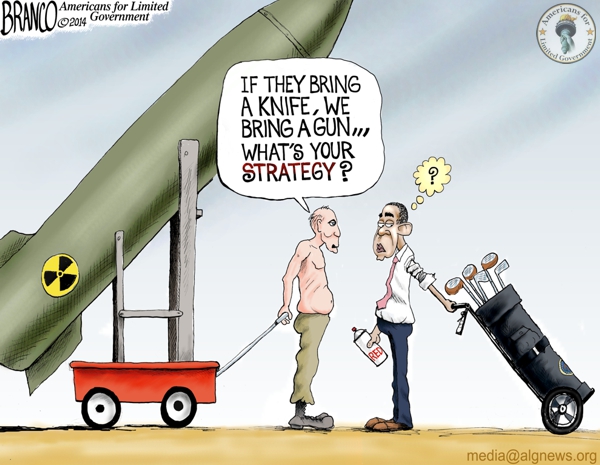
America would be better off if the Washington Post whored for lobbyists than for the US Imperial State, which has failed to adjust its imperial ambitions to its bankruptcy. As an example of its whoring for US Imperialism, on July 2, the Washington Post reported President Obama’s claim that Russian Prime Minister Putin is a person who lives partly in the past, with “one foot in the old ways of doing business and one foot in the new.”

If Putin has “one foot in the new,” he is ahead of Obama who has both feet in the past.

Obama said that Putin needs to learn that “the old Cold War approaches” to relations with the US are “outdated.”

The Post reported this as if a failure of Putin’s is endangering US/Russian relations. The Post did not point out that it is Obama, not Putin, who has wars of aggression against three independent countries--Iraq, Afghanistan, and Pakistan, with a fourth war threatened with Iran. We know for a fact these wars originated in the Bush administration’s lies and deceptions, but Obama continues the occupations and expands the wars, thus endorsing the deceptions.

It is the Washington whorehouse that unilaterally abrogated the anti-ballistic missile treaty with Russia and begin constructing anti-ballistic missile sites designed to negate Russia’s nuclear deterrent. If Russia’s nuclear weapons can be made useless, Russia can be knuckled under to accept America’s hegemonic will, and US hegemony takes another step forward.

It is Washington that is surrounding Russia with military bases: an anti-ballistic missile base in Poland, an anti-ballistic missile radar site in the Czech Republic, American-made “color revolutions,” which have installed US puppet governments in Serbia, Ukraine, and Georgia, with failures in former constituent parts of Soviet central Asia.

NATO, once a European/American alliance against Soviet invasion of Western Europe is now a mercenary US force fighting for America in Afghanistan and attempting to encircle Russia from the Baltics to Central Asia.

Obama will soon be on his way to Russia to discuss whether or not Russia is willing to give in to US demands to prostrate itself before US hegemony. Obama hopes to drive a wedge between Prime Minister Putin and President Medvedev, like the wedges Washington has facilitated between the ambitious ruling ayatollahs in Iran. If Obama can get Putin and Medvedev at odds, Russia will be neutralized.

That would leave China alone as an obstacle to US world hegemony.

The US has no media. But it does have a Ministry of Propaganda. Americans were programmed with days of propaganda that Islamic Iran, a member of the US-designated “axis of evil,” stole the election from the Iranian people. According to the US Ministry of Propaganda, the Iranian people are allied with the US government against the Iranian government.

Even people who are regarded as Iran experts said, without any evidence, that the elections were stolen. One of their arguments is that three hours were not enough time to count all the votes, yet it was announced that Ahmajdinejad won. The ignorance of “experts” made theft a certainty for American TV audiences.

The “experts” who make this assertion are obviously ignorant of Iran’s electoral procedures. For the ignorant “experts” and the Americans deluded by them, here is the way it works:

There are more than 45,000 voting places, which means less than 1,000 votes per voting place, an easy number to count and report in three hours. At each voting place there are a dozen or more observers, including every candidates’ representatives, representatives of the Guardian Council, and the local police. The votes are counted in the presence of all, and all sign documents attesting to the count.

The vote totals are forwarded to a central office in the region that has representatives of the candidates and the Guardian Council, where they are verified by a dozen or a dozen and a half of witnesses. From here the vote count goes to the Minister of the Interior, where the vote is announced.

Unless these procedures were not followed, and no evidence has been provided that the procedures were not followed, it is impossible to steal an Iranian election. It is much easier to steal an American one, which happens routinely.

There are thousands, indeed tens of thousands of witnesses, perhaps hundreds of thousands of witnesses, to the Iranian vote. Yet, only Mousavi and his corrupt supporters among the high living Iranian elite, who are fighting for personal power in Iran, contest the vote. The kids in the street were the usual dupes. At this stage in history, how can anyone believe that there is a pure candidate that wants to bring freedom and justice to the people? Anywhere. In any country, the US included.

Ignorant “experts” made a great noise about the fact that 50 cities or towns had votes in excess of registered voters. Again, this is a demonstration of the total ignorance of “Iranian experts” . In Iran, voters can vote wherever they happen to be at the day of election. Vacationers, business people on travel, commuters, and the partial absence of distinct voting districts, can produce a vote count in excess of the local registered population.

The Guardian Council examined these differences, added them up, and noted that if every additional vote was fraudulent, the number was insufficient to affect the outcome.

The Guardian Council has agreed to post every vote count.

Did you learn of these facts from Fox News, CNN, the New York Times, or from the CIA and Mossad bloggers? Of course not. Every time “your” media opens its mouth lies jump out that serve the US government’s hegemonic propaganda.

America’s salvation lies with Charles Pelton and the Washington Post’s business side managers. Once the American media is obviously a whorehouse, which it is, Americans might pull themselves out of their stupor and learn to recognize facts and to think for themselves.

But don’t hold your breath. From what I have seen, with few exceptions, Americans are as dumb and insouciant as they come. And they think they are the salt of the earth.

Paul Craig Roberts was Assistant Secretary of the Treasury in the Reagan administration. He is coauthor of The Tyranny of Good Intentions.He can be reached at: PaulCraigRoberts@yahoo.com

A Lethal Tenure at the World Bank

McNamara's Other Body Count

By JAMES BOVARD

Former Defense Secretary Robert McNamara, who died on July 6, was best known for dishonestly ratcheting up the Vietnam War. Despite his profusive lies that vastly expanded an unnecessary conflict and cost more than a million American and Vietnamese lives, McNamara is being touted as a great man. A New York Times op-ed praised him as the most compassionate member of the Johnson administration’s cabinet.

After McNamara resigned as defense secretary in early 1968, LBJ appointed him as president of the World Bank. A Washington Post tribute praised him as “a chieftain of foreign financial aid” and stressed that he “was often described as ‘the conscience of the West,’ for his relentless efforts to persuade the industrialized world to commit more capital to improving life in the have-not nations.” World Bank lending increased twelve-fold (to $12 billion a year) during McNamara’s 13-year reign.

But rather than a boasting point, McNamara’s time at the World Bank is as much his lasting infamy as his Vietnam record. A World Bank official sketch of McNamara’s presidency noted that “his reliance upon government intervention sometimes meant turning a blind eye to coercive practices ... and could lead the Bank to ignore the inefficiency and economic cost of government policies.”

McNamara’s favorite foreign leader was Julius Nyerere, ruler of Tanzania, which received more bank aid per capita than any other country in that decade. In the early 1970s, with World Bank aid and advice, Nyerere sent the Tanzanian army to drive the peasants off their land, burn their huts, load them onto trucks, and take them where the government thought they should live. The peasants were then ordered to build new homes “in neat rows staked out for them by government officials.”

Nyerere wanted to curb his countrymen’s individualist and capitalist tendencies and make them easier to control. He even outlawed people’s sleeping in their gardens at night, which meant that monkeys were free to help themselves to their crops. In many cases, the new government villages were far from the farmers’ own lands, and so they simply gave up tilling the land, with the result that hunger in Tanzania soared.

McNamara’s World Bank financed the brutal policies of the Vietnamese government in the late 1970s. The bank gave a $60 million no-interest “loan” to the government of Vietnam in 1978, even after widely circulated reports in the West of massive concentration camps and brutal repression. The bank announced that the loan would finance “an irrigation project that will boost rice production.” But a confidential bank report admitted that “the main effort to deal with the employment problem [in the south] consists of the creation of New Economic Zones — agricultural settlements that are intended to [forcibly] resettle 4 or 5 million people by the end of 1980.” Farmers who resisted the government’s “reorganization” were sent out in leaky boats, and tens of thousands drowned in the South China Sea.

Beginning in 1976, the Bank poured hundreds of millions of dollars into a scheme by the government of Indonesia to remove — sometimes forcibly — several million people from the densely populated island of Java and resettle them on comparatively barren islands. One Australian critic noted that transmigration was largely “the Javanese version of Nazi Germany’s lebensraum.

McNamara’s profusion of aid allowed politicians in Africa, Asia, and elsewhere to seize far more power over farmers, businessmen, factory owners, and other productive individuals. The result was a profusion of state monopolies that helped destroy hope for entire generations.

As long as McNamara could continue boosting the raw amounts of World Bank loans, he could continue pretending that he was saving the world. McNamara bankrolled socialist governments based on the same type of phony statistics that he used to justify expanding the U.S. war in Vietnam. He could strut like a vanquisher of either communism or world poverty as long as he embraced statistical hooey

Even after laying wreckage to much of the globe, Robert McNamara was still treated by much of the mainstream media as the “best and the brightest.” (The Washington Post appointed him to its board of directors). Citizens should be wary of those who would place halos over humanity’s brutal oppressors.

James Bovard is a former World Bank consultant who serves as a policy advisor for The Future of Freedom Foundation and is the author of Attention Deficit Democracy, The Bush Betrayal, Terrorism and Tyranny, and other books.

Does Stock-Market Data Really Go Back 200 Years?

As of June 30, U.S. stocks have underperformed long-term Treasury bonds for the past five, 10, 15, 20 and 25 years.

Still, brokers and financial planners keep reminding us, there's almost never been a 30-year period since 1802 when stocks have underperformed bonds.

These true believers rely on the gospel of "Stocks for the Long Run," the book by finance professor Jeremy Siegel of the Wharton School at the University of Pennsylvania that was first published in 1994.

[Intelligent Investor] Heath Hinegardner

What Does History Teach About Stocks?

2:22

How far back do investors need to look in order to gain insight into picking stocks? Intelligent Investor columnist Jason Zweig explains why historical data is not entirely reliable.

Using data assembled by other scholars, Prof. Siegel extended the history of U.S. stock returns all the way back to 1802. He came to two conclusions that became articles of faith to millions of investors: Ever since Thomas Jefferson was in the White House, stocks have generated a "remarkably constant" average return of nearly 7% a year after inflation. (Adding inflation at 3% yields the commonly cited 10% annual stock return.) And, declared Prof. Siegel, "the risks of holding stocks decrease over time."

There is just one problem with tracing stock performance all the way back to 1802: It isn't really valid.

Prof. Siegel based his early numbers on data first gathered decades ago by two economists, Walter Buckingham Smith and Arthur Harrison Cole.

For the years 1802 through 1820, Profs. Smith and Cole collected prices on three dozen banking, insurance, transportation and other stocks -- but ended up including only seven, all banks, in their stock-market index. Through 1845, they tracked 19 insurance stocks, but rejected 95% of them, adding only one to their index. For 1834 onward, they added a maximum of 27 railroad stocks.

To be a good measure of stock returns, an index should be comprehensive (by including many stocks) and representative (by including the stocks commonly held by investors). The Smith and Cole indexes are neither, as the professors signaled in their 1935 book, "Fluctuations in American Business." They cherry-picked their indexes by throwing out any stock that didn't survive for the whole period, whose share prices were too hard to find or whose returns seemed "inflexible," "erratic," or "non-typical."

The database of early U.S. securities at EH.net has so far identified more than 1,000 stocks that were listed on 10 different exchanges -- including Charleston, S.C., New Orleans, and Norfolk, Va. -- between 1790 and 1860. Thus the indexes relied on by Prof. Siegel exclude 97% of all the stocks that existed in the earliest years of the U.S. market, and include only the bluest of the blue-chip survivors. Never mind all of the canals, wooden turnpikes, rubber-hat companies and the other doomed stocks that investors lost millions on -- and whose returns may never be reconstructed.

There is a second problem with Prof. Siegel's data.

In an article published in 1992, he estimated the average annual dividend yield from 1802-1870 at 5.0%. Two years later in his book, it had grown to 6.4% -- raising the average annual return in the early years from 5.7% to 7.0% after inflation.

Why does that matter? By using the higher number for the earlier period, Prof. Siegel appears to have raised his estimate of the rate of return for the entire period by about half a percentage point annually.

Prof. Siegel calculated in his 1992 article that $1 invested in stocks in 1802 would have grown, after inflation, to $86,100 by 1990. In his book just two years later, however, he estimated that $1 in 1802 would have mushroomed into $260,000 by 1992. But in 1991 and 1992, stocks gained 30.5% and 7.6%, respectively, which should have taken the cumulative return up to only about $121,000. Nearly all of that huge difference seems to have come from Prof. Siegel's revised number for early dividends.

"I made an estimate of the dividend yield," Prof. Siegel told me, "through looking at a smaller set of securities and projecting it out." Money manager Robert Arnott of Research Affiliates LLC has recently estimated the early dividend yield at 5.2%. "Arnott has a much lower estimate, and that's a big difference," said Prof. Siegel. "I mean, I don't know what more to say."

I later called Prof. Siegel to ask him again about the difference between his original research and his book, but he didn't get back to me by press time.

What, then, are the odds that stocks will continue to lag behind bonds for the long run? The sad truth is that history can't tell us the answer. The 1802-to-1870 stock indexes are rotten with methodological flaws. So we have only the period since then, or four distinct and complete 30-year stretches of stock returns, to base our long-term investment decisions on.

Another emperor of the late bull market, it seems, has turned out to have no clothes.

Obama Exhorts Africans to Fight Corruption, Embrace Democracy

[President Barack Obama speaks to the Ghana Parliament in Accra on Saturday.] Associated Press

President Barack Obama speaks to the Ghana Parliament in Accra on Saturday.

ACCRA, Ghana -- The first African-American president came to the continent of his father to exhort Africans on Saturday to rid themselves of corruption, embrace democracy and move from the grand, often violent, struggles of liberation and tribalism to the quieter, more potent movement of stability and economic growth.

In a half-hour speech described as a major foreign policy address, U.S. President Barack Obama stood before Ghana's boisterous parliament, with a backdrop of festive kente cloth and adoring crowds cheering outside. The speech was broadcast on radio stations throughout the continent.

U.S. embassies in Africa held watch parties, movie theaters carried it live and what Internet access there is in Africa crackled with Twitter feeds and e-mailed snippets. The message was one that perhaps only Mr. Obama could have delivered: Africa's excuses are over. Africans must lift themselves up.

"In my country, African-Americans, including so many recent immigrants, have thrived in every sector of society. We have done so despite a difficult past, and we have drawn strength from our African heritage. With strong institutions and a strong will, I know that Africans can live their dreams in Nairobi and Lagos; in Kigali and Kinshasa; in Harare and right here in Accra," he said. "It won't be easy. It will take time and effort. There will be suffering and setbacks. But I can promise you this: America will be with you, as a partner, as a friend." (Read the full text of Obama's speech.)

News International/ZUMA Press

Vendors in Accra, Ghana, hawk memorabilia Friday in anticipation of President Obama's visit, his first to sub-Saharan Africa since taking office.

"It was a very good speech," said Camilo Pwang, a law clerk who watched the speech on TV. "I really felt good about it. It wasn't something like America would just come and help us. It's up to us as Africans to solve our own problems."

Mr. Obama has never been shy to play up his African immigrant heritage as a piece of his story, on par with his white mother's Kansas identity. Here, he used it to express empathy and ease the sting of his criticism. His Kenyan grandfather was a cook in British colonial Africa, addressed as "boy," though he was a respected elder and jailed briefly during Kenya's independence struggle.

His father herded goats, but came to the U.S. for his education when Kenya's economy was larger and richer per capita than South Korea's. He praised Ghana for its democracy and stability, and the economic growth that is beginning to follow.

But he did not gloss over the continent's problems, from tribalism and brutality to repression and corruption. Nor did he hesitate to assign blame.

"The West is not responsible for the destruction of the Zimbabwean economy over the last decade, or wars in which children are enlisted as combatants," he said. "In my father's life, it was partly tribalism and patronage in an independent Kenya that for a long stretch derailed his career, and we know that this kind of corruption is a daily fact of life for far too many."

He then promised four areas where the U.S. would partner with sub-Saharan Africa to promote its sustainable development: Support for democratic governance; aid that promotes self-sufficiency, not dependency; conflict resolution; and public health, for which he has promised $63 billion over six years, for AIDS treatment and prevention, tropical diseases and maternal and child health.

"When a child dies of a preventable illness in Accra, that diminishes us everywhere," he said. "And when disease goes unchecked in any corner of the world, we know that it can spread across oceans and continents."

Obama's First Visit to Sub-Saharan Africa

1:30

President Obama received a lavish welcome by his Ghanaian counterpart John Atta Mills. While many had expected an inaugural African visit to Kenya, the president selected Ghana to highlight an African nation embracing stability.

In the audience, members of parliament, some men bare shouldered in kente-cloth drapes, cheered and waved. Two former presidents sat in the audience, the most recent of which lost re-election just six months ago, to attest to the peaceful transfers of power that attracted Mr. Obama to this nation for his speech.

The speaker of the parliament hailed "a spiritual reunion with the first black American president of the United States," introducing him as Barack Hussein Obama, three names with diverse African and religious roots. His election, she said, was "shaking the slumber and despair out of people around the world."

And the speech was received with knowing cheers, revealing more about Ghana's internal politics than Mr. Obama likely intended. As he ticked off the litany of African complaints, a dysfunctional judiciary, disrespect for political minority rights, bribe taking in business and law enforcement, clapping and cheering alternated between the two political parties like it does during a State of the Union address before the U.S. Congress.

Sefa Ewurama Gohoho, business director of Canoe magazine, said much of that applause reflected growing dissatisfaction with the current government, just six months into its term. Most of the anger stems from the global economic crisis that has hit Ghana hard, she said, but Mr. Obama's talk of corruption stirred things up.

"There is corruption that exists across both parties, but when one is not in power, they're suddenly all for eradicating it," she said.

Mr. Obama address to parliament was restricted to an exclusive guest list of dignitaries. Much of the rest of the country huddled Saturday around TV sets and radios to listen in.

There was some disappointment that Obama chose not make a more public address. But the reception across the capital was, nonetheless, ecstatic.

Thousands of Ghanaians lined the blockaded streets of Accra on Saturday, waiting in hushed silence for Obama's motorcade to pass. This was as close as most Ghanaians would get to the man they have been waiting so anxiously to welcome.

Many here hoped that Obama would make a speech in front of a large crowd, as former President Bill Clinton did during his visit in 1998. Clinton spoke in front of an estimated 1 million people on his trip here.

Streets have been re-paved, curbs re-painted, and Obama-themed t-shirts, flags and local clothes churned out in the thousands. One woman waiting to see Obama arrive this morning had painted on her back, "Akwaaba Obama," or Welcome, in the local language.

The headline of the country's biggest newspaper Saturday reads, "Welcome Home, Obama." An advertisement for the Ghana Cocoa Board shows Obama's face created from cocoa beans. Ghana is the world's second-biggest cocoa exporter after Ivory Coast.

Ghana, already one of Africa's more popular tourist destinations, is also looking forward to a significant tourism bump from Obama's visit. One tour operator told a local radio station that she had already come up with a new slogan for her company: "Obama Came Here. When Are You?

Inside the Iranian Crackdown

When the Unrest Flared, the Ayatollah's Enforcers Took to the Streets of Tehran With Batons and Zeal

TEHRAN -- When the protests broke out here last month, Mehdi Moradani answered the call to crush them.

On the first day of the unrest, the 24-year-old volunteer member of Iran's paramilitary Basij force mounted his motorcycle and chased reformist protesters through the streets, shouting out the names of Shiite saints as he revved his engine.

On the fourth day, he picked up a thick wooden stick issued by his Basij neighborhood task force and beat demonstrators who refused to disperse.

Getty Images

Members of Iran's Basij paramilitary force, on motorcycle, police a demonstration in Tehran on Thursday.

By the eighth day, demonstrators alleging that President Mahmoud Ahmadinejad had rigged his re-election were out by the hundreds of thousands. Mr. Moradani says he mobilized in a 12-man motorcycle crew, scouting out restive neighborhoods across Tehran. He battled protesters with a baton and tear gas. The demonstrators fought back with rocks, bricks and bottles. Mr. Moradani says he handcuffed scores of demonstrators and dragged them away as they kicked and screamed.

"It wasn't about elections anymore," says Mr. Moradani, a short, skinny man with pitch-black hair and a beard. "I was defending my country and our revolution and Islam. Everything was at risk."

The mass uprising against the results of the June 12 election by supporters of Mr. Ahmadinejad's challengers has largely died down. Demonstrations this Thursday, though heated, drew thousands rather than hundreds of thousands. Iranian officials have said between 17 and 20 people have died in the monthlong protests. Independent organizations tracking human-rights violations in Iran put the death toll closer to several dozen.

If Supreme Leader Ayatollah Ali Khamenei succeeds in stamping out the unrest, it will be in large part because of Mr. Moradani and his colleagues in the Basij militia, the Islamic Republic's most loyal foot soldiers.

The story of Mr. Moradani, a midranking Basij member, offers a rare glimpse into one of the most mysterious and feared arms of Iran's regime -- and into the group's most significant mobilization since the Iran-Iraq War of the 1980s. This portrait of Mr. Moradani is based on interviews with him conducted in person and by phone, both before the uprising and after the crackdown began.

The Basij fanned out across Tehran, beating protesters with sticks, lining streets and squares, and roaring through neighborhoods on their motorcycles in a show of force. Regime officials praised the shock troops.

"Our efforts to unveil the faces of our enemy saved Iran from a grave danger," Yadollah Javani, the political chief of the Revolutionary Guard Corps, which commands the Basij, said last week.

Newsha Tavakolian / Polaris

Tehran shopkeeper Mehdi Moradani, a 24-year-old Basij member, helped suppress street demonstrations.

But the Basij also became the most visible target of the opposition's fury. In some neighborhoods, protesters covered streets with oil to thwart Basij motorbikes, surrounding and beating fallen Basij riders.

The Basij was created in 1979 by the founder of the Islamic Republic, Ayatollah Ruhollah Khomeini. It was devised as a volunteer force, to back up the Iranian army in the Iran-Iraq war. Many of its young members were deployed to the battlefield to walk ahead of soldiers and detonate Iraqi mines.

After the war ended in 1988, the Basij evolved into a type of neighborhood task force. Members serve as law enforcers, morality police, social-service providers and organizers of religious ceremonies. In times of crisis, the Basij are tasked with restoring order and ferreting out dissidents.

Iran's government says the Basij count some five million members. Independent analysts put the number closer to one million, out of an Iranian population of about 75 million.

Those numbers make the group the regime's largest and most wide-reaching network of security volunteers. Members, both men and women, slip easily between roles, from social worker to community spy.

The Basij don't wear uniforms. Men typically sport beards, and often wear loose-fitting shirts that fall untucked over their pants. Women members are usually covered in head-to-toe black chadors.

Rank-and-file members don't draw salaries, though there are perks to the job. They enjoy special consideration when competing for university admission or government jobs.

A Basij chapter operates out of every officially sanctioned institution, private or government owned. Ministries, universities, factories, schools, mosques and hospitals all house Basij units. Joining the Basij can be as easy as signing up. But members are carefully vetted. Indoctrination includes theology and ideology seminars, then military training.

During the administration of reformist President Mohamad Khatami, from 1997 to 2005, the Basij were only called out during times of street protests. After Mr. Ahmadinejad won the presidency in 2005, the Basij enjoyed something of a revival.

Under Mr. Ahmadinejad, authorities reinstituted street checkpoints, manned by Basij and separate morality police, who monitored everything from men's haircuts to how women wear their mandatory headscarves.

In 2005, Basij forces were placed under the command of the Revolutionary Guard Corps, Iran's most elite security force. The Guard, with responsibility for internal security, runs a sort of parallel military, with its own air force and naval branches, its own ministry and extensive business activities.

Mr. Moradani is the son of a former commander of the Guard, who fought against Israel in Lebanon in the 1980s and helped train the armed militia of Hezbollah, the Lebanese Shiite group.

The eldest of three children, Mr. Moradani was enrolled by his parents in the Basij's youth club when he was nine years old. The youth club is a mix between the Boy Scouts and Bible school. The clubs organize soccer games, swimming lessons and picnics in the woods.

Children are taught how to pray, and they recite Quranic verses. Religious teachings at the clubs emphasize the call to defend Islam, even at the expense of death, or martyrdom. Future Basij members to told to strive to create a pure society in line with conservative Islamic values.

Mr. Moradani remembers field trips to war monuments, Shiite shrines and so-called martyrs' cemeteries, where those who died in the Iran-Iraq war are buried. He received his first military training before he turned 14, learning how to handle a gun and fight from trenches, he says.

When he was 14, the Basij forces piled Mr. Moradani and 100 other youths into buses and took them around the dormitories of Tehran University. At the time -- 10 years ago this week -- students had been orchestrating large, antigovernment protests. The demonstrations were among the most significant since the 1979 founding of the Islamic Republic.

Basij commanders ordered the teenagers to beat up student organizers, Mr. Moradani says. They did. In 2003, when student uprisings erupted again, he rushed to help quash them.

"The revolution and Islam need me. I will give my life in a heartbeat if the regime asks me," Mr. Moradani said in an interview earlier this year at a shop in central Tehran, where he sells Islamic and revolutionary paraphernalia, including key chains, T-shirts and CDs. "Our society is now at the verge of sin and filled with antirevolutionary people."

In his small store, Mr. Moradani works with his shoes off, because he also prays there. The shop's walls are adorned with framed posters of Iran's Supreme Leader Ayatollah Khamenei, Hezbollah leader Hassan Nasrallah and Mr. Ahmadinejad.

"My heroes," he says.

Mr. Moradani, who lives in Shahr-eh Rey, a city adjacent to southern Tehran, didn't attend university. He focused instead on his religious studies. He says he hopes one day to follow in his father's footsteps and join the Revolutionary Guard.

He has taken the Guard's rigorous entrance exam twice, passing the ideology and the written portions both times. But he failed the final hurdle: an intense interview that lasts six to eight hours. Applicants must discuss why they are loyal to the regime and the Supreme Leader. He intends to try again.

Mr. Moradani takes religious-singing lessons and aspires to master "madahi," the art of chanting Shiite religious odes at holy ceremonies. His cellphone is programmed to ring with a famous religious song about Imam Hussein, a Shiite saint.

Before the election, Mr. Moradani campaigned for Mr. Ahmadinejad. He printed campaign posters and pasted them on walls. The day after the vote, with his candidate declared the winner, Mr. Moradani bought a box of chocolate cupcakes and drove his motorcycle to one of Mr. Ahmadinejad's campaign offices to celebrate.

A few hours later, he recalls, he was shocked to see demonstrators filling the streets. They set plastic trash bins afire along Tehran's long Vali Asr Avenue. Men and women, gathered in clusters across town, shouted "Death to the Dictator."

Riot police chased them away. The demonstrators regrouped and began chanting again -- a cat-and-mouse game that played out for days.

"I never expected the protests to be so intense and last so long," said Mr. Moradani in a phone interview from Tehran this week. "I thought it would be over in a few days."

Basij members organized to support riot police and other security officials across Tehran. Some Basij members infiltrated the opposition demonstrations, according to eyewitnesses.

Protesters, most of them young, fought back. "You saw young people on both sides mobilizing with vengeance and willing to kill," said Issa Saharkheez, a political analyst in Tehran, in an interview shortly after the election. Mr. Saharkheez was subsequently arrested in detentions that followed the unrest.

At the height of the street battles, in Sadaat Abad, a middle-class neighborhood in east Tehran, young men and women organized themselves into an unofficial militia to fight the Basij, with a "commander" taking responsibility for each street. Every afternoon, they would meet to prepare for the evening's expected battle, according to a 25-year-old student who was involved with the group.

They collected rocks, tiles and bricks from construction sites and spilled oil on the roads, an attempt to sideline the Basij's motorcycles. When a Basij rider would go down, the young men would beat him, according to the student. Women stood back, screaming "Death to the Dictator" and stoking bonfires in the street. Older supporters remained indoors, throwing ashtrays, vases and other household items from their balconies and windows onto the Basij motorcycle riders below.

"There was a war going on here every night," the student says. "We are not going to stand and let them beat us."

At the end of the first week of protests, Mr. Khamenei, the Supreme Leader, led Friday prayers and endorsed Mr. Ahmadinejad's victory. He ordered all demonstrators off the streets.

A few hours after Mr. Khamenei's sermon, Mr. Moradani got a call at home. The local Basij headquarters was holding an emergency meeting. About four hundred members showed up.

A top Basij commander briefed them on the riots and their responsibilities going forward. He called protesters "havoc makers" and accused them of having ties to Western countries aiming to sow chaos in Iran. The commander said the protests were no longer a matter of election unrest, but had become a serious, national-security threat.

"It is now everyone's Islamic and revolutionary duty to crush these antirevolutionary forces," Hossam Gholami, the 27-year-old chief of Shahr Rey Basij, told members, he recalled in a telephone interview this week. "You are not dealing with ordinary people. They are our enemy," he said he told them.

Mr. Moradani lined up with his comrades to receive an official letter of deployment, signed and bearing the seal of the Revolutionary Guard. He was given new equipment: a camouflage vest to wear over his clothes, a plastic baton, handcuffs and a hand-held radio.

Depending on rank, some members received shields and hard hats, and others were given chains and tear gas, according to Messrs. Gholami and Moradani. Mr. Moradani says no one in his division carried knives or guns.

On the streets the next day, a Saturday, the Basij and other security services cracked down, resulting in some of the bloodiest clashes with protesters. Mr. Moradani says he and his brigade roamed the streets, attacking what he says were violent protesters. Alerted about a burnt-out mosque, he rushed to the scene to secure the area.

One day, Mr. Moradani says, a mob chased him. He fell off his motorcycle and the crowd beat him with sticks and rocks, he says.

His leg was bandaged for a few days, and he still walks with a limp, he says. Dozens of Basij militia have been killed and injured, he says. Protesters have attacked his friends by throwing acid on their faces, he says.

A surgeon at Pars Hospital in central Tehran, where many of the fallen were taken, confirmed casualties on both sides. He said the hospital had operated on three young people from the opposition who were shot in the head and abdomen by security forces. He also treated scores who were badly beaten or stabbed, he said.

Among them were Basij and government supporters, he said -- including Basij members who had acid thrown on their faces.

Mr. Moradani says a young man in his group was killed when a protester in a black sports car ran over him, he says. The driver, he says, was arrested and confessed to driving over 11 Basij members. Mr. Moradani's account was impossible to independently verify.

For Mr. Moradani, the biggest shock during the election turmoil came in his personal life. He had recently gotten engaged to a young woman from a devout, conservative family. A week into the protests, he says, his fiancée called him with an ultimatum. If he didn't leave the Basij and stop supporting Mr. Ahmadinejad, he recalls her saying, she wouldn't marry him.

He told her that was impossible. "I suffered a real emotional blow," he says. "She said to me, 'Go beat other people's children then,' and 'I don't want to have anything to do with you,' and hung up on me."

She returned the ring he gave her, and hasn't returned his phone calls. "The opposition has even fooled my fiancée," he says.

A special report on Texas

Lone Star rising

Thanks to low taxes and light regulation, Texas is booming. But demography will bring profound changes, says Christopher Lockwood (interviewed here)

VISITORS to Governor Rick Perry’s vast office in the Texas capitol building in Austin (with a dome a mite taller, naturally, than the one in Washington, DC) are sometimes offered a viewing of a triumphalist video. Entitled “The Texaplex”, the seven-minute film is a hymn to the successes Texas has achieved in recent years, and they look pretty impressive.

Texas now hosts more Fortune 500 companies than any other American state. They include AT&T, Dell and Texas Instruments; oil giants such as Exxon Mobil, ConocoPhillips and Valero; American, Continental and Southwest Airlines; Fluor, a huge construction firm (recently lured from California); J.C. Penney; Halliburton; and 52 others. Texas claims to have been responsible for 70% of all the net new jobs created last year in America’s 50 states, though since only a few states created any jobs at all that is not quite as astonishing as it sounds.

True, the film tactfully ignores the recession. Texas followed America into the downturn in September last year, almost a year after the rest. In May it shed a worrying 24,700 jobs, and the Dallas Federal Reserve now forecasts that between 315,000 and 350,000 jobs will go in 2009. But proportionately the May figure was still lower than for the nation as a whole, and Texas’s unemployment rate, at 7.1%, was 2.3 points below the American average. Housing repossessions are still very rare; the state budget is still in surplus even as California and New York teeter on the edge of bankruptcy. Unlike those fellow states with large populations, Texas levies no personal income tax, and with almost unlimited space on which to build, its houses are big and affordable.

All this has brought people flooding in and made Texas America’s fastest-growing state. Net domestic inflows have been running at around 150,000 people in recent years, whereas California and New York have seen net outflows. Next year’s national census is expected to show that flourishing Houston has replaced struggling Chicago as America’s third city. Of the ten largest cities in America, three are in Texas.

Those three, Houston, Dallas and San Antonio, together with the state capital, Austin, and Fort Worth, make up what the boosters call the Texaplex: a densely packed triangle, with each side measuring about 300 miles, that is home to roughly 80% of the state’s population of 24m (second only to California’s 37m). This “Texas triangle”, containing America’s third-largest airport (Dallas-Fort Worth) and its second-busiest port (Houston, despite being 50 miles inland), has emerged as one of the most dynamic regions in all of America.

Joel Kotkin, an urbanologist based in California, recently compiled a list for Forbes magazine of the best cities for job creation over the past decade. Among those with more than 450,000 jobs, the top five spots went to the five main Texaplex cities—and the winner of the small-cities category was Odessa, Texas. A study by the Brookings Institution in June came up with very similar results. Mr Kotkin particularly admires Houston, which he calls a perfect example of an “opportunity city”—a place with lots of jobs, lots of cheap housing and a welcoming attitude to newcomers.

He is certainly right about the last point: not too many other cities could have absorbed 100,000 refugees, bigheartedly and fairly painlessly, as Houston did after Hurricane Katrina struck New Orleans. With vibrant Asian communities alongside its balanced Hispanic, white and black mix, with no discernible racial tensions, and with more foreign consulates than any American city except New York and Los Angeles, Houston is arguably America’s most enthusiastically cosmopolitan city, a place where the future has already arrived.

Wander round to the Senate side of the state capitol, though, and you will hear a different Texan tale. There, you might encounter Eliot Shapleigh, the Democratic state senator for a district centred on El Paso, on the extreme west of the Mexican border. Mr Shapleigh publishes his own report: “Texas on the Brink”.

His statistics are a lot less rosy. Texas has the highest proportion of people lacking health insurance of all 50 states; the third-highest poverty rate; the second-highest imprisonment rate; the highest teenage-birth rate; the lowest voter turnout; and the lowest proportion of high-school graduates. Mr Shapleigh is not surprised that these figures are so terrible: Texas spends less on each of its citizens than does any other state. Being a low-tax, low-spend state has not made Texans rich, though they are not dirt-poor either; their median income ranks 37th among the 50 states.

These two faces of Texas are hardly a paradox. Texas has one of the most unequal income distributions of any state, a legacy of the days when rich ranch-owners and oil billionaires were served by poorly paid ranch hands and roughnecks; and when Mexican immigrants crossed an essentially open border at will to toil away at sun-scorched farm jobs for pay that “Anglo” (non-Hispanic white) workers would not contemplate. You might call this Texas’s persistent “Southern” side, a contrast to its high-tech, urban and liberal “Western” side. These two aspects of Texas’s character and history still sit uneasily together, just as geographically the vast landmass of Texas belongs both to the South and the West.

Historically, a low-tax, low-spend model has served Texas fairly well, though the limitations of dependence on a few commodities (oil, cattle, cotton) were cruelly shown up in the mid-1980s. When the oil price crashed, the property market and then the entire banking system went down with it. Between 1982 and 1993 Texas saw 523 banks go under, and in the single year of 1986 its gross state product slumped by 3.1%. Since then it has been diversifying frantically, with considerable success.

Starstruck

But there are now two big reasons to think that the Texas model will need further revision. One is external to the state: the global economy has become a much more knowledge-intensive place, with even the oil business turning into a high-tech industry, so Texas needs more and better universities and schools. Embarrassingly for the state, only one of its universities (the small, private Rice University in Houston) makes it into the list of the top 20 universities in America, let alone the world.

In contrast to those Forbes ratings, the Kauffman Foundation, which promotes entrepreneurship, puts Texas only 18th in its ranking of states’ ability to take advantage of America’s “transformation into a global, entrepreneurial and knowledge- and innovation-based New Economy”. Texas falls down in a number of categories, most of them to do with education.

Kauffman ranks Texas 41st for the education level of its workforce as well as for the average education level of recent arrivals from elsewhere in America, suggesting that too many of its newcomers are chasing low-end jobs. A committee on education appointed by Mr Perry concluded in January that “Texas is not globally competitive” and gave warning that it “faces a downward spiral in both quality of life and economic competitiveness”.

The other, even more important, reason to expect change is internal. In 2004 Texas became one of only four states in America where whites are no longer in the majority. On recent trends, Hispanics will be the largest ethnic group in the state by 2015. Since they tend to vote Democratic, this has big implications for Texas’s political make-up and for national politics. And an increasingly assertive Hispanic caucus, in an increasingly Democratic state, also seems sure to demand better schools and health care for the people it represents, who currently lag far behind the Anglos on any social indicator you care to name. Close to half of Latinos in Houston, for instance, fail to graduate from high school.

How Texas responds to these forces will determine its future. Get it right, and the state will remain business-friendly and globally competitive, with high employment and a rising standard of living. Get it wrong, and Texas could follow California (which “flipped” from Republican to Democratic control in part thanks to rapid immigration) down the road of high taxes and excessive regulation. This route has bankrupted California and is prompting a net 100,000 people to leave each year. Many of them head for Texas. One simple statistic tells that tale: it costs nearly three times as much to rent a self-drive van for a one-way journey from Los Angeles to Houston as the other way around.

TEA WITH THE ECONOMIST

China and the dollar

Yuan small step

The dollar’s role as the world’s main reserve currency is being challenged

THE Chinese used to call dollars mei jin, which means “American gold”. Buying black-market dollars was considered the safest way to protect one’s savings. Yet in June when Tim Geithner, America’s treasury secretary, told students at Peking University that China’s official holdings of Treasury bonds were safe, the audience laughed. Faith in the greenback is waning.

In the build-up to the annual summit of G8 countries, which began on July 8th in the Italian city of L’Aquila, officials in China, Russia and India all called for an end to the dollar’s dominance in the international monetary system. Dmitry Medvedev, Russia’s president, declared on July 5th that the dollar system is “flawed”; his central bank has been reducing its dollar holdings. The People’s Bank of China (PBOC), China’s central bank, repeated its call for a new global reserve currency in June and is now taking the first steps towards turning the yuan into a global currency.

Beijing is particularly influential in this debate. The dollar accounts for 65% of the world’s foreign-exchange reserves (see chart), only slightly less than a decade ago and well ahead of the euro’s 26% share. Three-quarters of all reserves are in the hands of emerging economies; China alone holds one-third of the global stash.

So China has particular cause to worry that America’s massive printing of money in response to the financial crisis will undermine the value of its dollar reserves. There is much domestic anger about the potential losses China may face as a result of its lending to rich Americans. The government would like to diversify out of dollars: its new purchases of Treasury securities have fallen sharply this year. But any attempt to dump its stock of dollars would risk triggering a plunge in the currency. Instead, officials are mulling two ways out of the “dollar trap”: persuading the world to adopt a new global currency and encouraging the international use of the yuan.

In an essay in March, Zhou Xiaochuan, the governor of the PBOC, argued that basing the international financial system on a national currency will tend to exacerbate global imbalances. The dollar’s reserve-currency status let America borrow cheaply, causing the country’s credit and housing bubbles to persist for longer than they otherwise would have. Mr Zhou proposed that the world should replace the dollar with a global reserve currency, the SDR (Special Drawing Rights). Created by the IMF in 1969, and now based on the weighted average of the dollar, euro, yen and pound, the SDR was designed as a reserve currency but never took off. SDRs today add up to less than 1% of total reserves.

Under Mr Zhou’s plan the amount of SDRs would be hugely increased and the basket expanded to include other currencies, notably the yuan. Mr Zhou also proposes an SDR-denominated fund, managed by the IMF, into which dollar reserves could be exchanged for SDRs. Countries could then reduce their dollar exposure without pushing down the dollar (although it is unclear who would bear any exchange-rate losses).

Brazil, India and Russia have backed Mr Zhou’s proposal. But the SDR is unlikely to become a reserve currency any time soon. It would take years to develop SDR money markets that are liquid enough to be a reserve asset. Although the IMF’s executive board approved the first issuance of SDR-denominated bonds on July 1st, as the fund attempts to boost its resources, the bonds can only be bought and traded by central banks, not by private investors.

China’s alternative ploy is to promote the yuan’s use in international trade and finance. Starting on July 6th selected firms in five Chinese cities are now allowed to use yuan to settle transactions with businesses in Hong Kong, Macau and ASEAN countries. Foreign banks will be able to buy or borrow yuan from mainland lenders to finance such trade. In June Russia and China agreed to expand the use of their currencies in bilateral trade; Brazil and China are discussing a similar idea.

The PBOC has also signed currency-swap agreements with Argentina, Belarus, Hong Kong, Indonesia, Malaysia and South Korea. The central bank will make yuan available to pay for imports from China if these countries are short of foreign exchange. In another recent move, Hong Kong banks are now allowed to issue yuan-denominated bonds, a step towards building an offshore yuan market.

Qu Hongbin, an economist at HSBC, predicts that by 2012 nearly $2 trillion of annual trade (over 40% of China’s total) could be settled in yuan, making it one of the top three currencies in global trade. Others reckon this is too optimistic. Although Chinese firms are keen to invoice in yuan, trading partners will be more reluctant. There is no real forward market for the yuan, making it hard to hedge risk, and it is not accepted by most other countries.

The yuan will be used more widely for trade over the next decade but the idea that the yuan can become a reserve currency in the near future is ridiculous, says Arthur Krober at Dragonomics, a research firm based in Beijing. Not only does China lack the economic and political track record required to underpin a reserve currency, but its currency is not fully convertible. China would need to scrap capital controls so foreigners could invest in yuan assets and then freely repatriate their capital and income, but the government is wary of moving too quickly. A reserve currency also requires a deep and liquid bond market, free from government interference. This, says Mr Krober, implies a big retreat from China’s state-led model of credit allocation.

Even if China immediately scrapped capital controls the yuan would be unlikely to challenge the dollar as a reserve currency for years. The dollar did not replace sterling until half a century after America’s economy had overtaken Britain’s. America’s GDP is around three times as big as China’s, and its total trade is still larger.

Both the SDR plan and measures to internationalise the yuan also seem to assume that China’s problem is simply that too many of its reserves are in dollars. But China’s real problem is that it is running a persistent current-account surplus; in order to keep the yuan closely tied to the dollar it has to keep buying more dollar assets. If China really wants to reduce its exposure to the greenback it must allow the yuan to rise. It would incur a loss on its existing reserves but stem future losses. But so long as China maintains its current exchange-rate policy, it is, ironically, helping keep the dollar dominant.

Signs of hope for the car industry

Living on scraps

As General Motors emerges from bankruptcy the worst may be over for carmakers

CALL them green fumes. Sales of cars and trucks in America showed their smallest year-on-year decline last month since September, when Lehman Brothers crashed—although the drop was still a massive 31%. That would correspond to annual sales of 9.7m. But according to General Motors, the first three weeks of the month were a good deal better, running at a rate of 10.3m. Sales subsequently slowed as some customers held back in anticipation of the federal “cash-for-clunkers” scheme, which began this month.

Such incentives appear to be working well. Although the American scrappage incentives apply from July 1st, buyers may hold back until the details of the plan are finalised later in the month. That could turn out to be more good news for GM. Judge Robert Gerber has allowed the “new” GM to acquire the good assets of “old” GM. And on Friday July 10th, following the example set by Chrysler’s fast-track exit, GM too emerged from Chapter 11 after a mere 40 days. Having lost nearly two percentage points of market share during the bankruptcy proceedings, the new GM is planning a marketing blitz next month to announce its resurrection.

Data released this week by J.D. Power Automotive Forecasting showed that during June, car sales in Western Europe grew by 4.1%. In Germany, which has the most generous of the many scrappage schemes in operation, sales were up by an astounding 40.5% for the month and 26% for the year so far. Monthly sales rose by nearly 12% in Italy and by 7% in France.

The industry is fearful about what will happen when the various scrappage schemes are phased out (all are limited either in time or funding). There is a widespread belief that the incentives, which range in value from about €750 ($1,050) to €2,500 and are only available to buyers with cars over ten years old, are only “pulling forward” demand and will thus enfeeble the recovery when it comes.

Sascha Heiden of IHS Global Insight, a forecasting firm, thinks the scrappage schemes in Western Europe will boost sales by about 1.2m this year and reduce them by 600,000 next year. But Max Warburton of Bernstein Research argues that most of the sales “are new and incremental, rather than pull-forward”, since customers with nine- to ten-year-old cars usually replace them with used instead of new ones. Mr Warburton believes that “normal” buyers of new cars will begin to return to the market next year as the economy improves. He expects Western European sales to be roughly stable in 2010, but with demand for bigger and more profitable vehicles replacing the artificial surge in demand for small, cheap cars.

There are other reasons for the industry to feel more optimistic. Inventories have now been almost fully depleted, paving the way for a jump in production in the last four months of the year. A pronounced increase in American vehicle sales, which fell by 40% towards the end of last year and have stayed at their lowest level since the 1970s, is a near certainty. Although rising unemployment will continue to act as a drag on the market, car loans, the lifeblood of the industry, have become available again, even to less-than-prime borrowers.

Mr Warburton also points to a recovery in profitability, thanks to falling raw-material costs, that should be worth as much as €500 a car next year. Nor should the positive impact on carmakers in both America and Europe of a radically slimmed down GM be underestimated. GM, says Mr Warburton, has been “the overriding deflationary force on industry pricing” for decades.

There is still uncertainty about when mature car markets will return to the kind of sales seen in the decade up to 2007 (according to IHS Global Insight it will not be for at least four years) and who will be the winners and losers among the big carmakers. But for now, it is enough that the worst of the nightmare seems to be over.

Obama Explains How The Recovery Act Helped End Our Economic Free Fall...?

Friday, July 10, 2009

Bush Deserves More Credit on Iran

Defying their regime once more, Iranians have renewed their protests in the streets of Tehran. Last month, when the protests began, the New York Times ran a story hinting that Iran's demonstrators may have been inspired by an "Obama factor." The article suggested that President Barack Obama's diplomatic outreach, unlike his predecessor's approach, emboldened Iranians to rise up against their regime, demanding it repair relations with America and the world.

The Times reporter drew a stark contrast between the presidency of George W. Bush and that of Mr. Obama. According to the article, "Iran's regime was able to coalesce support by uniting the country against a common enemy: President Bush, who called Iran a pillar of the 'axis of evil.'" Alarmed by Mr. Bush's hostility, Iranians "swallowed their criticism of [their] hard-line regime and united against the common enemy."

Setting aside the article's claims about an "Obama effect," its characterization of the Bush years is unfair and misleading. As someone who served in Mr. Bush's White House, I can attest that the administration's Iran policy was far from perfect. The Islamic Republic's ongoing nuclear program is proof enough of the policy's serious shortcomings. Yet, in light of recent events, it seems apparent that Mr. Bush got some important things concerning Iran right.

First, some facts. Mr. Bush delivered his infamous "axis of evil" speech in January 2002. On several occasions thereafter he followed up with statements harshly attacking the legitimacy of the Iranian regime. He repeatedly distinguished between the people of Iran and their "unelected rulers."

Did Mr. Bush's confrontational posture really lead Iranians to rally behind the regime? Hardly. In November 2002 and again in June 2003, student-led protests rocked Tehran and other Iranian cities, as the New York Times itself acknowledged at the time. In both cases, demonstrators' demands included sweeping democratic reforms. During the 2002 clashes (which dragged on for weeks), the Times reported that protesters had been "boldly critical of the government, including the supreme religious leader [Ali Khamenei], who is normally beyond criticism." The protestors called for the "secularization of the religious system" -- an end to clerical rule.

Similarly, in June 2003, protesters rapidly focused on the need for fundamental change. A manifesto signed by hundreds of intellectuals and clerics declared that Ayatollah Khamenei's claims to absolute power were "a clear heresy towards God and a clear affront to human dignity." The BBC reported that chants of "Death to Khamenei" were heard at the rallies. More than 4,000 people were arrested before the demonstrations were suppressed.

The reality is that large-scale anti-regime protests erupted on multiple occasions throughout Mr. Bush's first term -- the very moment when his Iran policy was most aggressive. The suggestion that Iranians "swallowed their criticism" of the Islamic regime in an anti-American response to Mr. Bush's tough stance is simply not borne out by the facts.

The current crisis in Iran undermines another conventional wisdom about Mr. Bush's Iran policy. Many believe that his policy was grounded in ideology rather than realism. But Mr. Bush's assessment of Iran has so far proven much more accurate than Mr. Obama's. In his eagerness to draw Iran's rulers into negotiations, Mr. Obama has gone to great lengths to signal his acceptance of the Islamic Republic's legitimacy and permanence. In stark contrast, Mr. Bush always understood that large swaths of Iranian society do not consider their regime to be legitimate. They detest it and yearn for freedom and democracy. Mr. Bush knew that regime change was not the crazed fantasy of a small cabal of American neoconservatives. It was the deepest desire of tens of millions of Iranians.

Iran's recent turmoil also sheds light on Mr. Bush's conviction about pressuring the Iranian regime. Critics warned that Mr. Bush's attempt to isolate Iran diplomatically, sanction it economically, and threaten it militarily would trigger a nationalist backlash against Washington. But Mr. Bush believed that such efforts were essential. They would alert the Iranian people, as well as Iran's elites, to the disastrous consequences of the Islamic Republic's policies.

Today, Iran's burgeoning opposition is clearly angered by the country's dismal economy, ashamed of its status as an international pariah, and alarmed by the growing danger of military conflict. Opposition members will not accept the regime's efforts to scapegoat the U.S. Instead, their fury has been directed inward at the brutality, economic mismanagement, and outrageous behavior of the Islamic regime.

As Mr. Obama reassesses his Iran policy in the wake of the Iranian protests, he could do worse than to incorporate at least a few pointers from Mr. Bush's playbook. That would mean an adjusted Iran strategy that sees the Iranian people as allies of the Free World, not the Islamic Republic. It would also mean spending less time trying to reassure Iran's despotic rulers of the U.S.'s benign intentions. Mr. Obama should instead spend more time on using his enormous international popularity to further mobilize the world against Iran's tyrants.

Mr. Hannah served on former Vice President Dick Cheney's national security staff from 2001-2009.

Democrats For a Flat Tax?

Some California legislators realize revenue from the rich is too volatile.

Los Angeles

Karen Bass is an unlikely tax cutter. She's the Democratic speaker of the California State Assembly, a fierce defender of the labor movement, and an advocate for repealing a constitutional provision that requires that tax increases pass the state legislature with a two-thirds majority.

But as California faces a budget crisis that defies efforts to resolve it, there is a woman-bites-dog story developing with Ms. Bass at its center. By the end of the month, a commission she pushed to create is expected to recommend that the state adopt a flat (or at least flatter) personal income tax and cut or repeal corporate and sales taxes.

Normally, such proposals would be dead on arrival in Sacramento. But now many Democrats, including the speaker, are realizing that what they need is a tax base that will provide steady funding for their programs. In other words, they need a tax base that doesn't count on a large slice of revenue from taxes on a relatively small number of wealthy residents who can flee the state or who are themselves vulnerable to losing a substantial portion of income in a recession.

No one understands the political dynamics of volatile state revenues better than Ms. Bass. She's a progressive who has made finding more money for foster care and children's services a top priority. And after negotiating three rounds of budget cuts in the past year she has grown weary of deficit politics. So, determined to modernize the tax system, Ms. Bass is pledging to put whatever recommendations the commission comes back with to an up or down vote.

If that happens, California's tired budget debate -- which usually pits Democrats against Republicans -- will take on a new twist. This time the debate to watch will be among Democrats as they hash out whether taxes are too progressive to accomplish progressive political goals.

In a public meeting last month, a majority of the commission's 14 members -- seven of whom were appointed by Ms. Bass and her Democratic counterpart in the state Senate, the other seven by California's nominally Republican governor -- seemed to favor replacing the state's six income-tax brackets with a single 6% rate. The plan they mentioned would also eliminate corporate and sales taxes and replace them with a business net receipt tax.

"You have to admit," commissioner member Fred Keeley, a Democrat who is the treasurer of Santa Cruz County, said after the meeting, "that the package is a game changer."

In recent days, Mr. Keeley and other Bass appointees, have countered liberal objections with other proposals. But each adopts the logic of simpler taxation. One would create three income-tax brackets (0%, 4% and 7%). Another would cut corporate taxes and the income-tax rate for top earners while imposing a new fuels tax.

It remains unclear how much Ms. Bass will fight for the commission's recommendations. Underscoring the political sensitivity of tax reform, she has been cautious in recent public comments, emphasizing that she is "open-minded" about supporting the recommendations herself. She told me she didn't like the idea of a "flat tax" if it meant raising the tax burden on poorer and middle-class Californians. But she also said she worried about the state's heavy reliance on about 144,000 wealthy people to pay half of all income taxes for a state with a population of 38 million. "It's a crazy statistic," she said.

Late last year, Ms. Bass convinced Gov. Arnold Schwarzenegger and the state senate's Democratic leader, Darrell Steinberg, to create the Commission on the 21st Century Economy with a mandate for tax reforms that would reduce volatility in state revenue. The Democratic appointees include state tax expert Richard Pomp and Berkeley law school dean Christopher Edley Jr. The governor's appointees include economists Michael Boskin and John Cogan, as well as businessman Gerald Parsky.

"One of the reasons why Californians go through the annual budget ritual in a way that is most years very, very frustrating is that our sources of revenue are far too volatile," Mr. Steinberg said at a December press event.

Other Democrats have made similar points. U.S. Sen. Dianne Feinstein recently explained her state's problems to the New York Times by saying that 55% of state tax revenues come from income tax and 45% of that comes from the top brackets.

Susan Kennedy, a Democrat who serves as Mr. Schwarzenegger's chief of staff and who is the most important unelected official in the Capitol, was recently asked at a business event what the state tax system needed. "Flatness," she replied. "Our revenue stream is way too progressive."

But as the commission gets close to making recommendations, opposition is forming on the left. Liberal-leaning groups that study the budget argue that all taxes are volatile and that the state should raise taxes, particularly on property, to balance its budget. Public employee unions are demanding in blunt terms that Democrats make the tax code more progressive. The American Federation of State, County and Municipal Employees recently asked legislators to sign statements supporting some $44 billion in new taxes, much of them on the wealthy and industry.

Robert Cruickshank, a contributing editor at the progressive blog Calitics, says of the commission's expected recommendations: "Most progressives are not going to support these kind of regressive solutions. You would see a fight if the Democratic legislature made a move to do this."

The commission poses a political quandary for Republicans. Joel Fox, a former president of the Howard Jarvis Taxpayers Association, predicts that libertarians could embrace the flatter taxation while conservative populists might oppose the commission out of fear its reforms would increase government revenues.

But supporters of the commission's proposals are likely to get a fair hearing. Frustration with the California status quo crosses all ideological lines. Even those who disagree with the commission's thrust are glad to have something new to discuss. "I'm really glad they're trying something," said Rick Jacobs, chairman of the Courage Campaign, a progressive Internet network with more than 700,000 members. He argues that the existing state tax system is too regressive. "It's important to push the discussion out."

Privately, some Democrats hope that the commission sparks a debate that will lead to a tax hike. These Democrats want to end the two-thirds vote requirement on tax hikes and lift limits on commercial property taxes put in place by Proposition 13 in 1978. But regardless of the aims of some heading into this debate, the result is that by starting a discussion on tax reform Democrats could create a flatter, simpler tax code for California. These are strange times in the Golden State.

Mr. Mathews, a senior fellow at the New America Foundation, is the author of "The People's Machine: Arnold Schwarzenegger and the Rise of Blockbuster Democracy" (Public Affairs, 2006).

Europe Should Hope Obama Fails

The continent has been free riding on the strength of U.S. capitalism.

It's clear by now that President Barack Obama wants to turn the United States into something more like Germany or Belgium -- a "social democracy" in which redistribution ("spread the wealth around," as Mr. Obama explained to Joe the Plumber during the campaign) is an expanding government's main concern.

[Commentary] AP

Europe, for its part, has reciprocated our president's apparent love of their system by treating him like a messiah. He is the man, they sense, who will finally make good on George H.W. Bush's famous promise in 1988 to make America a "kinder and gentler nation."

Alas, this mutual love is self-defeating. That's because Mr. Obama will doom the low-growth, weak-defense European model to the extent he gets the U.S. to emulate it.

Consider some basic facts: Europe has been riding on our economic coattails and sheltering under our defense umbrella since the end of World War II nearly 65 years ago. Our markets have been open to European goods, and our strong currency and relative affluence -- the product of our much-maligned free-market economic model -- have provided Europe with a ready buyer. (Question: How worried were French wine-makers about Americans boycotting French wines in 2003? Answer: très worried.)

While providing a huge market for Europe's goods, we've also substantially relieved the European powers of the burden of defending themselves. Yes, France has an aircraft carrier and a nuclear force de frappe, but it's not really capable of projecting significant force around the world anymore. Germany, the world's third-largest economy, has a vestigial high-seas fleet and a modest air force. Even the Royal Navy is a shadow of its former self. "The U.S. last year spent about 44% more on defense than all other NATO members combined," Robert Wall recently noted in Aviation Week.

By assuming Europe's defense the U.S. has, in effect, allowed it the luxury of extremely expensive and ultimately unsustainable social-welfarism.

The great irony here is that the European model American leftists envy couldn't survive without its despised cowboy counterparty. If the U.S. economy weakens because of increased regulation, heavy-handed unionization, and higher taxes and debt to support an expensive social agenda -- all policies Mr. Obama and the Democrats in Congress are pushing hard -- it will hurt Europe.

The market for Europe's exports will shrink, and the U.S. will be less able to defend Europe. Europe is also facing a demographic cataclysm in the near future because of low birth rates (under 1.3 children per woman in the EU, well below the 2.1 necessary to maintain the population). Thus Europe will be increasingly unable to sustain its current welfare state, the very model that the left in the United States adores.

Mr. Durstewitz is co-author of "Younger Than That Now -- A Shared Passage From the Sixties" (Bantam, 2001).

BLOG ARCHIVE